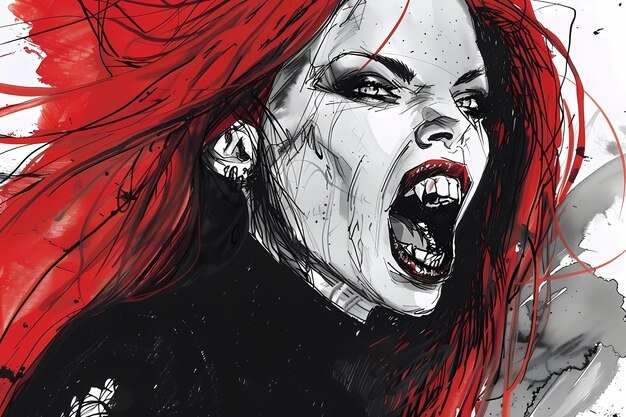
Few figures haunt our collective consciousness quite like the vampire. From ancient whispers to modern blockbusters, the thematic & symbolic significance of vampires has captivated humanity for centuries, evolving with our fears and desires. But why do these bloodthirsty, immortal beings continue to hold such a powerful, almost magnetic, grip on our imagination? It’s not just about the fangs and the dark castles; it’s about what they represent within ourselves and the world around us.
This deep dive uncovers the complex layers of meaning embedded in the undead, exploring how they reflect our deepest anxieties, secret desires, and enduring questions about life, death, and power.
At a Glance: Decoding the Undead
- Ancient Roots, Modern Resonance: Vampires symbolize age-old fears of death, disease, and the unknown, updated for contemporary anxieties.
- Mirrors to Our Dark Side: They embody our repressed desires, rebellion, and the primal urge for power and control.
- Alluring Danger: The blend of seduction and menace highlights forbidden sexuality and temptation.
- Immortality's Double Edge: They offer eternal life, but at a terrible, lonely cost.
- Identity in Flux: Vampires grapple with "otherness," reflecting human struggles with identity and belonging.
- Dream Weavers: In dreams, they often signal negativity, parasitic influences, or unresolved emotional conflicts.
From Ancient Fears to Modern Icons: A Brief History of the Vampire's Genesis
The chilling concept of a blood-drinking entity isn't new; it slithers through ancient Mesopotamian, Hebrew, and Egyptian myths. But the vampire as we largely understand it today truly sharpened its fangs in 17th and 18th-century European folklore. Tales like that of the Serbian peasant Petar Blagojevic in 1725, believed to have returned from the dead to prey on his village, ignited widespread panic and cemented the creature in popular imagination.
Then came the legendary figures who would immortalize the myth. Vlad the Impaler, a 15th-century Wallachian prince notorious for his brutal tactics, provided Bram Stoker with the sinister moniker for his 1897 novel, Dracula. Stoker's work codified many of the vampire tropes we know, popularizing the legend across Western culture. Earlier, John Polidori’s 1819 novella The Vampyre introduced the aristocratic, seductive vampire, a motif further refined by Joseph Sheridan Le Fanu’s Carmilla. From these literary origins, vampires have bled into every corner of popular culture, from Anne Rice’s The Vampire Chronicles and Stephenie Meyer’s Twilight series to iconic films like Nosferatu and Dracula, music, and beyond.
These foundational stories weren't just entertainment; they were cultural touchstones that laid the groundwork for the incredibly rich symbolism vampires carry.
The Many Faces of Fear and Desire: Unpacking Vampire Symbolism
The true power of the vampire lies not just in their supernatural abilities, but in their capacity to embody a vast spectrum of human experiences, fears, and aspirations. They are complex metaphors, shifting and adapting to the anxieties of each era.
Death, Mortality, and the Gnawing Dread
At their most fundamental, vampires are walking, breathing (or unbreathing) embodiments of death. They are creatures from beyond the grave, forever reminding us of our own mortality and the fragile nature of life. This direct link to death makes them potent symbols of dread and horror, acting as a constant, looming threat in countless narratives. The vampire’s insatiable hunger for life force highlights the ultimate, undeniable end that awaits us all, tapping into humanity's most ancient and primal fear: the cessation of existence.
The Shadow Self: Darkness and Hidden Desires
Vampires dwell in perpetual darkness, not just physically, but metaphorically. They represent the "shadow"—that part of ourselves, identified by Carl Jung, that holds our repressed desires, negative emotions, and morally ambiguous impulses. Free from societal guilt and remorse, vampires act on their darkest wants, becoming living symbols of our own hidden aggression, selfishness, and forbidden urges. They can be seen as manifestations of our unhappiness, our struggles, our disappointments, and the negativity we spread, a stark reflection of the less palatable aspects of the human psyche.
Enigma and the Allure of the Unknown
cloaked in shadows, moving with an eerie silence, vampires are the ultimate enigma. Their mysterious nature, combined with their vulnerability to daylight and preference for the night, creates an intoxicating blend of danger and fascination. They operate outside the normal rules of society and nature, existing in a liminal space that piques our curiosity while simultaneously unsettling us. This air of secrecy and the unknown is a major draw, pulling us into their world even as it warns us of peril.
The Rebel Without a Pulse: Anti-Establishment Symbolism
There's an inherent rebellious streak in the vampire's existence. They defy human norms, living outside conventional society, often forming their own secretive communities or existing as lone wolves. This "us against the world" attitude resonates strongly, particularly with younger audiences or anyone who feels alienated or constrained by societal expectations. Vampires symbolize a rejection of the status quo, an embrace of difference, and a powerful, albeit dark, independence. For many, they represent the ultimate outsider, finding strength in their non-conformity.
Seduction and Forbidden Desires
The modern vampire is often strikingly beautiful, impossibly charming, and intensely alluring. This potent seductiveness links them directly to desire, temptation, and often, forbidden sexuality. They embody a dangerous paradox: terrifying yet intensely desirable, their allure promises an escape from the mundane but at a profound, often deadly, cost. This intertwining of fear and intense longing speaks to the powerful, sometimes destructive, nature of desire itself. The act of the bite, so intimate and invasive, often carries strong sexual undertones, further cementing their role as symbols of dangerous, alluring passion.
Claws of Control: Power and Domination
Vampires are inherently dominant beings. Their physical strength, supernatural abilities, and predatory nature evoke both a primal desire for power and a deep-seated fear of being controlled. Their fangs are not merely tools for feeding; they are sharp symbols of predatory power, danger, and the ability to dominate. The bite, then, becomes an act of profound control, literally turning the victim into an extension of the vampire's will or transforming them into one of their kind, stripping away their autonomy. This dynamic speaks to universal anxieties about who holds the power in our lives and the urge to exert it ourselves. If you're looking for different takes on these dominant figures, you might want to Explore all vampire characters from various mythologies and literary works.
The Eternal Paradox: Immortality and Its Price
Perhaps one of the most compelling aspects of the vampire is their immortality. This eternal existence taps into humanity's deep-seated desire to cheat death, to live forever. Yet, vampire immortality is rarely a blessing; it’s often a curse. It comes with profound loneliness, an inability to connect with the mortal world, and the constant burden of past atrocities. The vampire's invulnerability to age and disease is contrasted with their vulnerability to sunlight or stakes, a poignant reminder that even the most powerful beings are not invincible and that every gift has its price. It forces us to confront whether eternal life is truly a desirable fate if it means eternal suffering or isolation.
Shadows of Sickness: The Vampire as Disease
Historically, vampires were intimately associated with disease, a reflection of pre-scientific fears of epidemics and unexplained illness. The symptoms of various real-world ailments — like tuberculosis (coughing blood, night sweats), porphyria (sunlight sensitivity, blood cravings), or rabies (fever, muscle weakness, aggression) — were sometimes misdiagnosed as vampirism or believed to cause it. In this context, the vampire becomes a terrifying symbol of contagion, a spreading blight that drains vitality from the community, mirroring the fear of plagues that could decimate populations.
Mirroring Identity: Otherness and Self-Discovery
Vampires often struggle profoundly with their dual nature: part human, part monster. This internal conflict serves as a powerful metaphor for human struggles with identity – whether it's grappling with sexuality, gender, cultural heritage, or simply finding one's place in the world. They are the ultimate "other," existing outside the conventional human experience, forcing us to consider how power dynamics and societal perceptions shape who we are. Their journey often reflects our own attempts to understand and reconcile the different facets of our identity, especially when those facets feel contradictory or alienating.
A Spectrum of Suffering: Emotions Embodied
Beyond individual concepts, vampires are often potent vessels for intense, often conflicting, emotions. They can embody the terrifying yet seductive pull of fear and desire, the tragic yet cruel nature of love and hate, or the crushing weight of guilt and obsessive fixation. Their violence often leads to profound guilt, and their fixations on victims can be terrifyingly obsessive. Through their narratives, we explore the extremes of the human emotional landscape, stretched and distorted by immortality and monstrousness.
Anatomy of the Undead: Symbolism in Vampire Traits
Even the most iconic physical attributes and weaknesses of vampires carry significant symbolic weight, reinforcing their core thematic roles.
The Lifeblood: What Blood Truly Represents
Blood is life. It pulses through us, nourishes us, and sustains us. For the vampire, consuming blood is not just sustenance; it's a profound act that symbolizes power over life and death. By taking blood, they steal vitality, youth, and existence itself. It represents the ultimate appropriation of another's essence, a perverse exchange that grants the vampire continued existence at the expense of their victim. It’s a literal and metaphorical drain of life force.
Predator's Tools: The Symbolism of Fangs
Vampire fangs are unmistakable. These sharp, elongated canines are symbols of raw, predatory power and danger. They signify the vampire's status as a hunter, a dominant force that pierces the veil of life. The fangs also represent a primal, untamed aspect of nature, a reminder that underneath the often-cultured exterior of many literary vampires, there lies a dangerous, animalistic beast ready to assert its control and claim its sustenance. They are the instruments of their dominion.
Aversion to Light: Sunlight and Vulnerability
Sunlight is lethal to most vampires, a universal truth in their lore. Symbolically, sunlight represents life, warmth, growth, and purity – everything the undead are not. Their aversion to it underscores their connection to darkness, decay, and unnatural existence. It also serves as a critical reminder of their mortality and inherent vulnerability. Despite their power and immortality, they are bound by a fundamental weakness, a chink in their otherwise impenetrable armor, signifying that even the most formidable forces have limits. It’s a metaphor for truth and exposure, as the light reveals their monstrous nature.
When the Undead Visit Your Dreams: Decoding Vampire Nightmares
Dreams are often a mirror to our subconscious, and dreaming of vampires can be a particularly vivid reflection of hidden anxieties or challenges. Interpreting these dreams can offer insights into your waking life.
- General Negativity: If a vampire appears in your dream, it often signals an influx of negativity in your life. This could be internal (your own pessimistic thoughts) or external (toxic people or situations). The dream urges you to identify and take action to eliminate these draining influences.
- Shackled by Addiction: A vampire can powerfully represent an addiction that has taken hold of you, whether it's to drugs, alcohol, or even unhealthy behavioral patterns. The vampire's relentless feeding mirrors how an addiction saps your strength and controls your life.
- Parasitic Influences: This is a common interpretation: a vampire in your dream may symbolize a parasitic person in your life who is draining your energy, resources, or emotional well-being. It could also represent a parasitic aspect of your own personality, where you might be unintentionally feeding off others. The dream encourages self-reflection on such behaviors.
- Being Bitten: To be bitten by a vampire in a dream suggests you feel someone is unjustly draining your life energy, using you, or taking advantage, and you feel powerless to stop it. It’s a strong signal to examine who or what is disempowering you.
- Killing a Vampire: This is a highly positive dream omen! Killing a vampire signifies overcoming a significant obstacle, often related to dependence. You are taking control of your life, breaking free from addiction, or effectively confronting the causes of your reliance on others or external circumstances. It means you’re reclaiming your power.
- Being Followed or Lured: If a vampire is following or luring you, it can represent strong sexual tension or attraction toward a crush or lover. However, it also carries a warning: it might indicate you are becoming overly dependent on this person, potentially leading to emotional vulnerability. It’s a call to rethink the dynamics of that relationship.
- Dating a Vampire: Dreaming you are dating a vampire is often considered a bad omen. It suggests that a special person in your life – perhaps your partner, a close friend, or family member – might cause you emotional harm or disappointment in the near future. It’s a prompt to be on guard and protect your emotional well-being.
Slaying the Beast: The Symbolic Destruction of Vampires
Just as their existence is laden with symbolism, so too are the methods by which vampires are destroyed. These acts of destruction aren't arbitrary; they carry their own deep meanings related to overcoming evil, purity, and returning to a natural order.
- The Wooden Stake to the Heart: Popularized by Stoker, the stake driven through the heart is arguably the most iconic method. Symbolically, the heart is the seat of life, emotion, and the soul. Piercing it with a natural, organic material like wood represents a return to nature, a rejection of the unnatural undead state, and a definitive cessation of their borrowed life.
- Decapitation: Separating the head from the body is a definitive act of destruction, ensuring the vampire cannot rise again. It symbolizes the complete severing of their connection to their monstrous existence, denying them any further thought or action.
- Exposure to Sunlight: The most common lethal weakness, sunlight symbolizes truth, purity, and life itself. For the vampire to burn in its rays is a symbolic purification, an obliteration of the darkness they embody. It's the ultimate undoing by the very force of nature they defy.
- Holy Water and Religious Symbols: These represent divine power, purity, and faith. Their effectiveness against vampires underscores the creature's unholy nature and association with evil, suggesting that spiritual righteousness can vanquish the forces of darkness.
- Burning to Ashes: Complete incineration reduces the vampire to nothing, signifying absolute annihilation. It leaves no trace, ensuring their evil cannot linger or reanimate, a definitive end to their contamination.
- Drowning in Running Water: Flowing water often symbolizes purity, cleansing, and the passage of time. For a vampire to be destroyed by it suggests that their unnatural state cannot withstand the natural, cleansing flow of life.
- Starvation: While less dramatic, withholding blood (their life source) leads to their slow demise. This symbolizes the triumph of natural order over their parasitic existence, showing that even the undead are ultimately dependent on life's fundamental requirements.
These methods collectively represent humanity's fight against corruption, unnatural forces, and the fears that drain us of our own vitality.
The Enduring Bite: Why Vampires Still Captivate Us
The thematic and symbolic significance of vampires runs deep, resonating with our most profound human experiences. They are more than just monsters; they are reflections of ourselves, albeit distorted and magnified in the dark mirror of the supernatural. They remind us of death, challenge our notions of morality, tempt us with forbidden desires, and offer unsettling glimpses into eternal power and its terrible cost.
As long as humanity grapples with mortality, identity, power, and the allure of the forbidden, vampires will continue to stalk the shadows of our stories, whispering truths about the human condition that we might otherwise be too afraid to confront. Their bite may be deadly, but their symbolism is immortal.